A Real Inspiration

Jaime Escalante, the inspirational mathematics teacher on whom the movie Stand and Deliver is based, died yesterday at the age of 79 years old.

Though Jaime lived in a totally different part of the country from me and taught a totally different subject matter, I could not help but be moved every time I watched Stand and Deliver. I think that this movie and Jaime's real-life story was so powerful because of his absolute faith and certainty that his students could achieve and would achieve if given the time and attention that true learning requires. I'm sure that the movie version of his story is dramatized, but the essence of his story is what's inspirational to me. We can never give up on our students. We cannot doubt their ability or their potential. We are not judges, we are teachers. Our students can learn, we need to teach. And reteach. This is what I take from this story. Thanks, Jaime Escalante, for sharing your life and your story!

Why I Love April: Every Day is a Poem

National Poetry month is finally here. Now, along with the rest of the world, I am able to celebrate the true miracle of life--A well written poem. I love, love, love poetry. I love it in all shapes and sizes and colors and forms. I love all sorts of poets and poems, from the classical to the revolutionary to the simple to the modern to the childish to the American to the otherworldly. It's all good.

One amazing benefit of having a month dedicated to poetry is that there are a number of folks who are willing to send you a poem every day of this month for nothing. All you need to do is provide your email address and you'll get a poem in your inbox every single day. It's brilliant.

Here are some services to think about taking advantage of during this month (and year round, in some cases):

Thirty Days/ Thirty Poets


The Writer's Almanac with Garrison Keillor

Poem a Day from Poets.org

Poetry Daily

Poem-a-Day from Knopf Doubleday Publishing

Poem of the Day from the Poetry Foundation

Your Daily Poem

The Perfect Birthday Poem

Maybe this poem speaks louder to me than it normally would because today is my birthday, but I thought it fitting nevertheless. I look forward to reading the poems that I receive every day in my email inbox. Some days they are more relevant than on others, but they are always a pleasure to read and share. Here is the poem I received today, which is doubly perfect because it comes from a Maine author:


How true is that? I've gone from wishing I'd be old and mature to dreading going to bed after ten at night! Oh, how we change!

Censorship: Protection through Silence?

Of all the nonviolent crimes in the world, censorship is the worst. I understand that reading materials and artwork evoke strong emotions, some of which can disturb the reader/ viewer to the point of discomfort. I don't like being uncomfortable any more than the next person, but I do know that stepping out of my comfort zone can lead to productive, valuable thoughts and experiences.

I am not a parent, but every year I am in the position of selecting and purchasing thousands of dollars of reading materials for teens whom I care about deeply. I don't want to offend or hurt or damage my students through a reading experience. However, I don't want to prevent them from connecting with books and poems and plays that could open their mind to the realities that others experience around the world.

When I read that "Paint Me Like I Am", a collection of poems from the WriterCorps organization has been challenged by a concerned parent, I was saddened beyond belief. I can understand a parent not wanting their particular child to read a certain book, but to prevent others from reading a book is unconscionable. And, the irony of this case is that the poems that are being challenged by this parent are written by actual teens. These poems, which I have used for years in my own classroom, are written by teens who are dealing with real issues.

Apparently, this is not the first time that this particular collection of poems has come under fire. Last year, a principal from New Jersey cut an "offensive" poem out of the book and returned it to the school library shelves. The poem in question is written about an abusive stepfather.

The problem that the parent and the principal are not seeing is that abuse happens and that poems have the ability to make abused teens feel like they are not alone. Poetry can move students to action, to talk about their experiences, to find help, to talk. Censorship of poetry (and other art forms) does not protect, it takes away a potential connection for someone who needs it. And no one person has the right to decide to take that connection away from a person who needs or enjoys it.

Poetry: It's More Than One Unit


When I first started teaching, poetry reading and writing was an "activity" that I saved for the end of the year. I would "do" a unit on poetry, which usually included a mixture of classic and modern poets and attempt to have students engage in these select poems. I would also use a multi-genre project to inspire students to write poems, providing specific poetic forms for them to imitate.

Now, poetry is a year-long fascination for me. I have come to see that poetry is all at once the easiest and most complex way to integrate a love of language and playfulness into the curriculum. It is no longer an afterthought for me; rather, it has become the inspiration for entire courses of study within my classroom.

Like most secondary education English teachers, I love National Poetry Month. Also, like most secondary education English teachers, I am overwhelmed by National Poetry Month. There is so much that I hope to do, hope to accomplish, wish I could try and do with my students during this one short month. Fortunately, there are all sorts of suggestions and poems and lessons available to teachers in my predicament. Unfortunately, these ideas are amazing and add to my want to "do" more during April, a month that includes a week-long vacation.

I've decided that I need to breathe deeply. I've incorporated more poetry than ever in my regular classroom teaching. Poetry is taught/ discussed/ shared/ written/ created at least once per week in my classroom now. Gone are the days when I teach a poetry unit to my students and call it "good". Poetry is a focal point, not a byline.

I plan to write a series of posts related to this topic for late March and throughout April. In these posts, I hope to share some of the resources (which I may or may not have time to use) in hopes that you and your colleagues may be inspired to incorporate poetry into your teaching or to add to existing poetry ideas/ lesson plans.

Here is my first item. I just discovered the Poetry Everywhere project, which is port of the Poetry Foundation. On this site, you can find videos narrated by poets reading their work. It's pretty darn incredible. Be sure to click the picture I've provided in this post. It's linked to an inspiring poem titled "Weighing In" by Rhina Espaillat. Check back for more throughout late March and all of April.

Controversy in Texas: My Case Against Textbooks


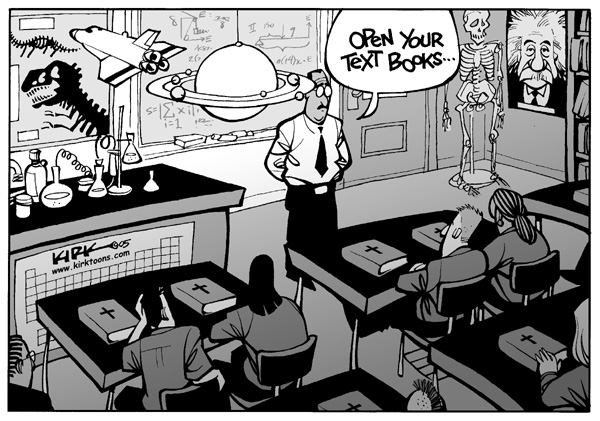
Lately, I've read a whole lot, more, and even more and about the controversial efforts of the Texas Board of Education to include a greater emphasis on the Christianity of our founding father and exclude "negative" words like capitalism, in favor of friendlier terms like "free enterprise system". I understand that people are aghast and upset about this issue because as Texas goes, so goes the nation. Well, this is true in terms of textbooks sales at least. The textbooks created for little Texans are bought and sold to many, many other states.

I'm going to use this issue as proof for my anti-textbook philosophy. I used a textbook in my first year of teaching and have not picked up one since. I find them to be a bit useless and off-putting. I think that textbooks are designed to meet the needs of a general population. I like to believe that my teaching and my lesson planning seeks to go beyond the usual. I think that even when textbooks are created with the best of intentions, censorship still exists. I vividly remember teaching a shortened version of Romeo and Juliet out of a textbook that first year of teaching. Of course, all of the parts that were excluded involved the "good stuff": The intimate scenes between the young lovers.

No matter how hard a textbook company tries to be unbiased and inclusive, there are materials and authors left out. I'd rather compile the poems, plays, excerpts, essays, and other such materials as I see fit. I don't need a textbook to lead my teaching. Plus, I worry that textbooks are sometimes used in place of a larger work, which alienates the reader from the reading experience. I've never curled up in bed with a great textbook. I don't envision my students becoming life-long readers because of a well-crafted textbook.

Plus, the internet allows for a huge variety of reading options. A stock collection of fifteen to twenty poems in an American Lit textbook is no longer the only resource available to students and teachers. Of course, pulling together a wide variety of materials and resources online takes time. We're used to this, though, right? Perhaps this Texas textbook scandal will finally make us all realize that the best way to teach is with authentic materials that are pulled together from a variety of sources. Maybe the days of a one-book curriculum are finally over. Outside of Texas, that is!

Using Documentaries To Discuss Social Issues with Teenagers

Lately, there have been a number of memorable and professional documentary series created for teenagers. I am a huge fan of documentaries and find them appealing for a number of reasons. My students, however, are less impressed with docs that I find fascinating. They are not as patient with the slow, PBS-style format that I have come to love (but probably would've found boring when I was a teen too).

Now, I'm making an assumption here that many of you are looking for ways to talk with your teen students about serious and controversial social issues. I know that it can be easier to gloss over issues of drug use, teen pregnancy, abuse, homelessness, suicide, immigration, and racism rather than face them head-on with students. Most of my philosophy of education is dedicated to talking about real issues with students. I feel that these conversations will help students to become more connected to their learning in my classroom and involved in the realities of their world. For me, I want to be real because the real world is out there and will not slow just because you happen to be only eighteen and a recent high school grad.

I know that many teachers/ adults/ people with brains are not fond of MTV. Because I have seen the debauchery and wanton recklessness of such series as Jersey Shore and The Real World, I can understand this sentiment. In the recent past, though, there have been a number of documentaries aired on MTV that could be of use in the classroom. Here are some that I've enjoyed and would use in the classroom:

True Life: This is a great series that has been on MTV for a long, long time. I've seen every single episode and have to admit that the featured topics have helped me to stay in touch with issues facing today's teens and twenty-somethings. From dealing with drug addiction to being deaf to hating your parents to eating disorders, this series covers it all. Don't have MTV? You can view full episodes directly from this site. You can share a clip or a full episode with students to inform your lesson plan. I know that this show has helped me to show students cultural events and experiences that my students may not otherwise be aware of. We live in a rural environment, but that does not mean that students don't need to be prepared for a global world when they graduate.

16 and Pregnant: This is a newer series from MTV. I am currently watching season two, which is a bit different from season one. Season two profiles one teen girl per week, devoting a full hour to their story. Season one showed five or six girls every week, giving each girl a portion of an hour. I do love seeing a full hour of each teen's pregnancy experience, but I felt a bit more connected to the teens with season one's format. I've not yet used this program in my teaching, but I plan to when we read The First Part Last by Angela Johnson. This young adult title follows the story of a teen boy who is raising his infant daughter without the baby's mother. It is a powerful story, but I feel that there are so many different types of teen pregnancy stories that it could use the help of 16 and Pregnant to highlight some of the other types of choices teen parents can make.

30 Days: This show is created and hosted by Morgan Spurlock, famous for his McDonald's documentary called Super Size Me, where he ate only cheeseburgers and fries for 30 days. The 30 Days television show is developed along the same lines, but with a variety of themes and topics. I've used the Life on an Indian Reservation episode in teaching Sherman Alexie's The Absolutely True Diary of a Part-Time Indian. Students loved it and made references back to it throughout the unit. It really helped to show students what a reservation looks like and it shows how Spurlock changes as a result of living on a reservation for a month. There are many other subjects that are explored in interesting ways through the three seasons of this series: Immigration, guns, animal rights, homosexuality, living on minimum wage, and others. You can find full episodes of this show for free on hulu.

Of course, there are other documentaries available online for free through PBS and other such reliable sources. I use those sources as well, but these options are also thoughtful and provocative. They just happen to be aimed at a slightly less mature audience!